Seeing the blue fire at Kawah Ijen
The blue fire is the reason many people book an Ijen night, and it is the one thing no tour can promise. You may see it; nobody can promise it. This page explains what the flames are, why they come and go, and what the night gives you without them.
What the blue fire is
The flames are sulfur gas burning as it leaves vents on the crater floor, not molten rock. Wikipedia's page on blue lava explains the mix-up and gives temperatures of up to 600 °C for the burning gas.
The gas burns around the clock but shows only in darkness, so the window closes as the sky lightens, before about 4:30 am. Part of the gas condenses into the yellow sulfur that the miners cut, which ties the flames to the mine on the crater floor.
Why no tour can promise it
No listing we read promises the blue fire, and most say it depends on conditions. Our pick's own page calls it tentative and says the crater area is unstable after an earthquake, so its team goes down only when the sulfur fumes are safe.
Indonesia's volcano agency, PVMBG, keeps Ijen at Level I (Normal), yet each day it advises visitors not to go down to the crater floor or near it. The park office, on crowded nights, has stopped visitors roughly 500 m (1,640 feet) before the floor.
The mine plays its part as well. Our pick's page says miners sometimes put the flames out to protect their sulfur, and the wind can turn within minutes and push the fumes toward the path.
None of this changes with the price you pay, as our Ijen price table shows. A dearer trip buys comfort on the road, not a better night at the vents.
What each listing says in its own words
- Our pick from Banyuwangi: the blue fire is "tentative", and the descent depends on the fumes
- Indotravelteam from Bali: blue flames "possibly", with a descent into the crater if it is allowed
- Java Sunrise and Jogja Borobudur Tour & Travel: not guaranteed, or dependent on conditions
- Opsi Travel, on day 3 of its Bromo and Ijen trip: the blue flame is subject to weather
One Banyuwangi operator we left off this site goes further. Its page says the blue fire is "currently not available" and shows "a visual illustration" in place of a photo, which at least tells you plainly what to expect.
Before you go, check the alert level the day before on PVMBG's live page. A raised level can close the trail or push the start later, and a later start ends any chance of the flames.
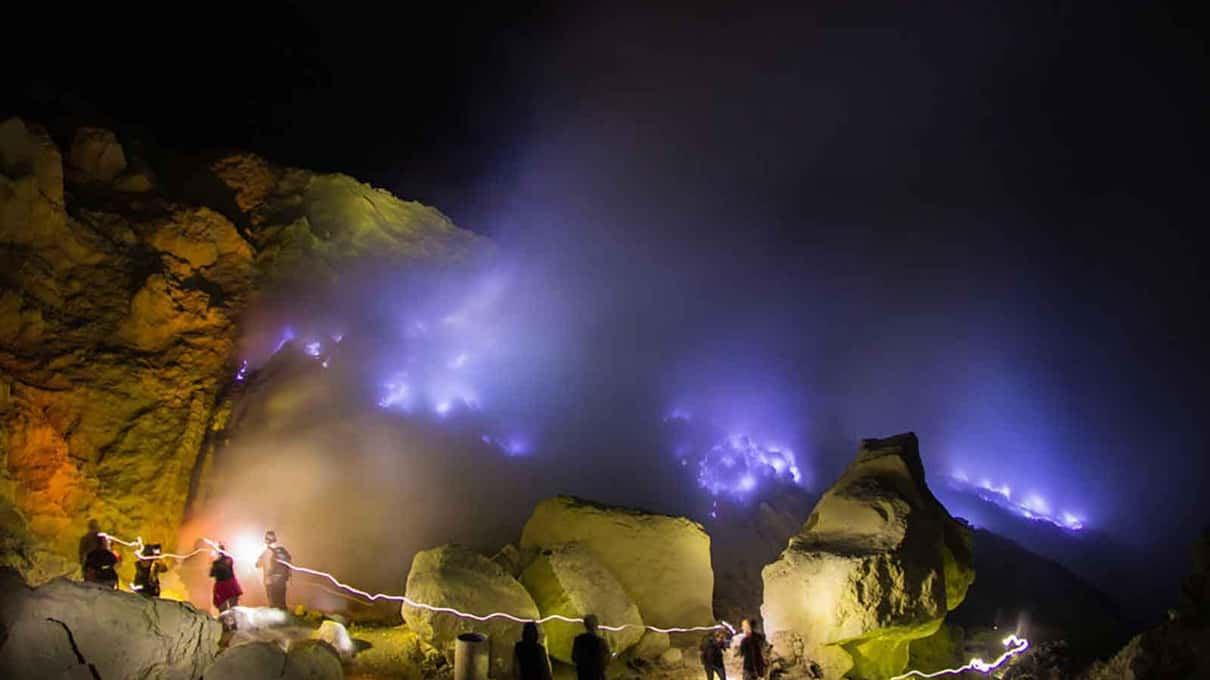
For an early hour at the rim
Our pick reaches the rim around 3:00 am, while it is still dark, and goes down into the crater only when the fumes allow. Some guests write that theirs was the first group into the crater.
What guests on two tours report
Guests in the newer reviews of our pick and of the same-night trip from Bali still report seeing the flames. Reviews of our pick mention small groups with room to move at the top, and guides who sing with a guitar once the walking is done.
A review describes one night, not yours. Read the newest ones on the listing a few days before you travel, and look for any mention of the descent being closed.
Timing, darkness and the trail
Because the flames need darkness, the tours start in the small hours. Our pick sets off from the Paltuding car park at 2:00 am after a briefing and reaches the rim at about 3:00 am, which leaves time in the dark before the light comes.
The trail is about 3 km (2 miles) with about 500 m of climb, and slow walkers lose minutes that count. Our hike page covers the steep parts, and the page on the best time to go gives sunrise for each month, which ends the window about 20 minutes earlier.
The trips from Bali reach the same car park after hours on the road and a ferry crossing. A late ferry or a queue at the port eats into the dark hours, so the Banyuwangi nights leave a wider margin, as our Banyuwangi page explains.
What you see when the descent is closed
From the rim, the flames show at best as a faint glow far below, and on some nights not at all. That still leaves the climb in the dark and the miners passing with their loads, as our sulfur miners page describes.
At dawn the turquoise lake appears, among the most acidic lakes in the world, with sunrise over the ridges. That view comes with every tour, weather allowing, so book the night for the hike and the lake and count the flames as a bonus.
Gas, masks and turning back
Near the vents the gas is mostly sulfur dioxide, harsh on eyes and lungs. Every one of the six trips hands out a mask, and guides turn people back when the wind brings the gas onto the path.
Several tours say they are not suited to people with asthma or heart problems. Read our health check and mask page and ask your doctor before you book a night at the crater.
To pick a night, compare each Kawah Ijen blue fire tour by its start time and descent rule, or go straight to a guided night at Kawah Ijen with our pick. Trips from Bali or across Java sit with the other Ijen blue fire trips.