What to wear on the Ijen night hike
You hike at Kawah Ijen from the small hours until after sunrise, near the top of a volcano, and the night is cold. These seven items cover it, with what the tours lend and what they leave to you.
We have no measured temperature for the rim, so we give no figure. The listings ask for warm layers and a jacket, and tour 2 lends a jacket, wool gloves and a beanie, which tells you how the guides see the night.
The cold also comes from the pace. You sweat on the 500 m (1,640 feet) climb, then stand at the rim and the sunrise viewpoint for an hour or more, so layers you can open and close work better than one thick coat.
Every Kawah Ijen blue fire tour we compare follows the same pattern, a car in the dark, the climb, a long wait at the top and the walk down. The list below follows the listings' own packing notes, with our advice marked as ours.
1. Hiking shoes with grip
Tour 1's packing list starts with hiking shoes, and the trail explains why. You climb about 3 km (2 miles) in the dark and come down the same way, and the descent into the crater, when it is open, is steep and rocky.
Shoes you have already walked in beat new boots. In our view, trail shoes with a deep sole can do the job, while sandals and smooth-soled sneakers cannot; our page on the trail shows why the descent matters.
2. Long pants
Long pants are on tour 1's list too, and they guard against the cold and the rocks alike. Pick something you can move in, since a long climb in stiff jeans soon starts to rub.
Leggings or hiking trousers both work. Shorts leave your legs cold during the wait for sunrise, which on tour 1 runs from about 5:00 to 6:00 am at the viewpoint with tea in hand.
3. Warm layers underneath
Tour 1 asks for warm clothing as well as a jacket, and the trick is how many pieces. A thin base layer plus a fleece or wool top lets you strip down on the climb and bundle up again at the top.
Cotton holds sweat and then feels cold, so a synthetic or wool layer next to the skin is our advice. Pack a spare top in your day bag if you tend to sweat hard on climbs.
4. A jacket that keeps out wind and rain
Tour 1 asks for a jacket and rain gear, and tour 2 lends a jacket if you arrive without one. A light shell over your layers blocks the wind at the rim and turns a shower in the wet season, about November to April.
If you travel light on Indotravelteam's 24-hour trip from Bali, the loan jacket saves packing one. Check its size and warmth at the guesthouse, and bring your own if you feel the cold easily; our page on going from Bali compares that trip with the others.
A low-cost night that still lends the gear
Java Sunrise picks you up at 11:00 pm in Banyuwangi and lends a gas mask and a headlamp, with water and a morning snack in the price. You bring the warm clothes, and the clinic check may cost about IDR 35,000 extra.
5. Gloves and a hat
Your hands and head feel the cold first while you stand at the rim waiting for light. Tour 2 lends wool gloves and a beanie; on the other tours bring your own, since they weigh nothing and fit in a pocket.
Thin gloves that still work on a phone screen are handy for photos at dawn. A warm hat matters more than a stylish one, since you will wear it under a headlamp strap for hours.
6. A headlamp, even if the tour lends one
Tours 1 and 3 lend a headlamp, as does tour 4, and tour 2 hands out a flashlight. A headlamp keeps both hands free on the rocks, which a phone light held in one hand never will.
Bringing your own is our advice if you have one, charged or with fresh batteries. Loan lamps vary, and the climb plus the crater asks several hours of light from a single charge.
7. Glasses instead of contact lenses
The sulfur fumes sting the eyes, and fiddling with a lens on a dark trail with cold, dusty fingers is no fun. Our advice is to wear glasses for the night, even if you wear lenses every other day.
Pack eye drops for the drive back if your eyes sting easily. Your guide will move the group out of a cloud of fumes, and our page on the health check and masks explains the rest of the safety kit.
A buff is not a gas mask, and the smell stays
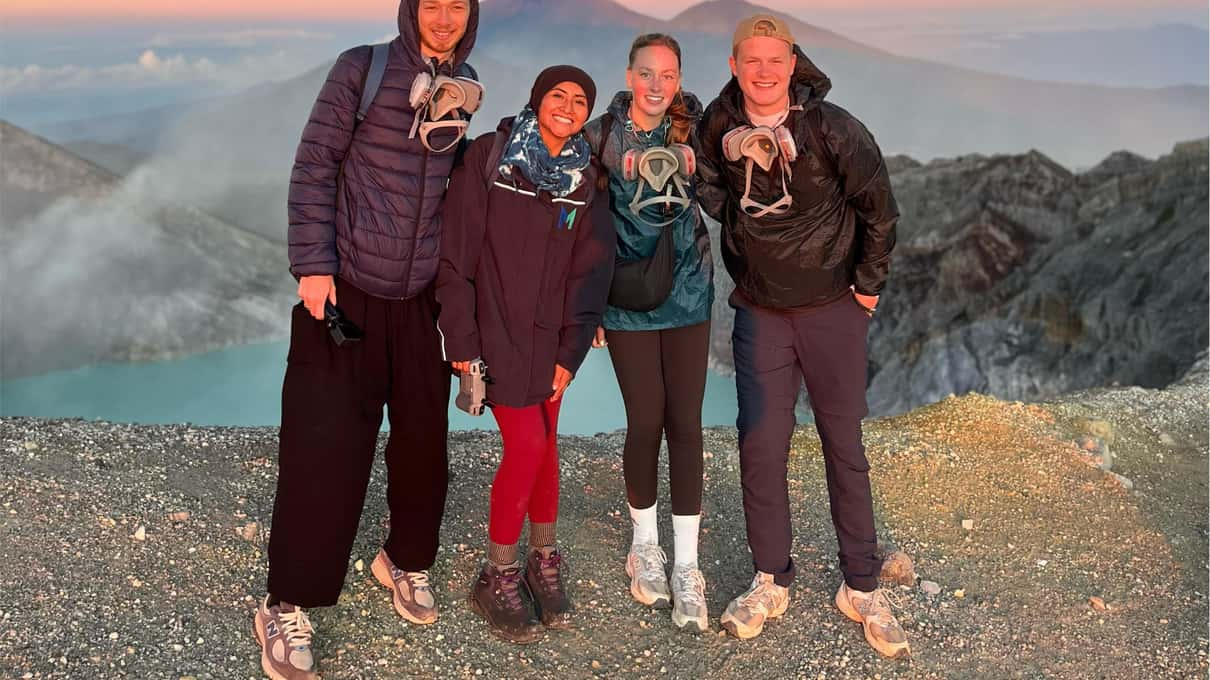
A buff or scarf keeps your neck warm, but it does not filter sulfur dioxide. Every tour on our list lends a proper gas mask, so wear that in the fumes and keep the buff for the cold.
Expect your clothes to smell of sulfur afterwards. Wear things you do not mind washing twice, and pack a bag to keep them apart from the rest of your luggage on the drive or ferry home.
Once your bag is ready, compare the Kawah Ijen night hikes by pickup town and price. Our page on when to go covers the drier months, and more tips for the crater night sit on the home page.